Hugo Ludwig · 17 October 2026
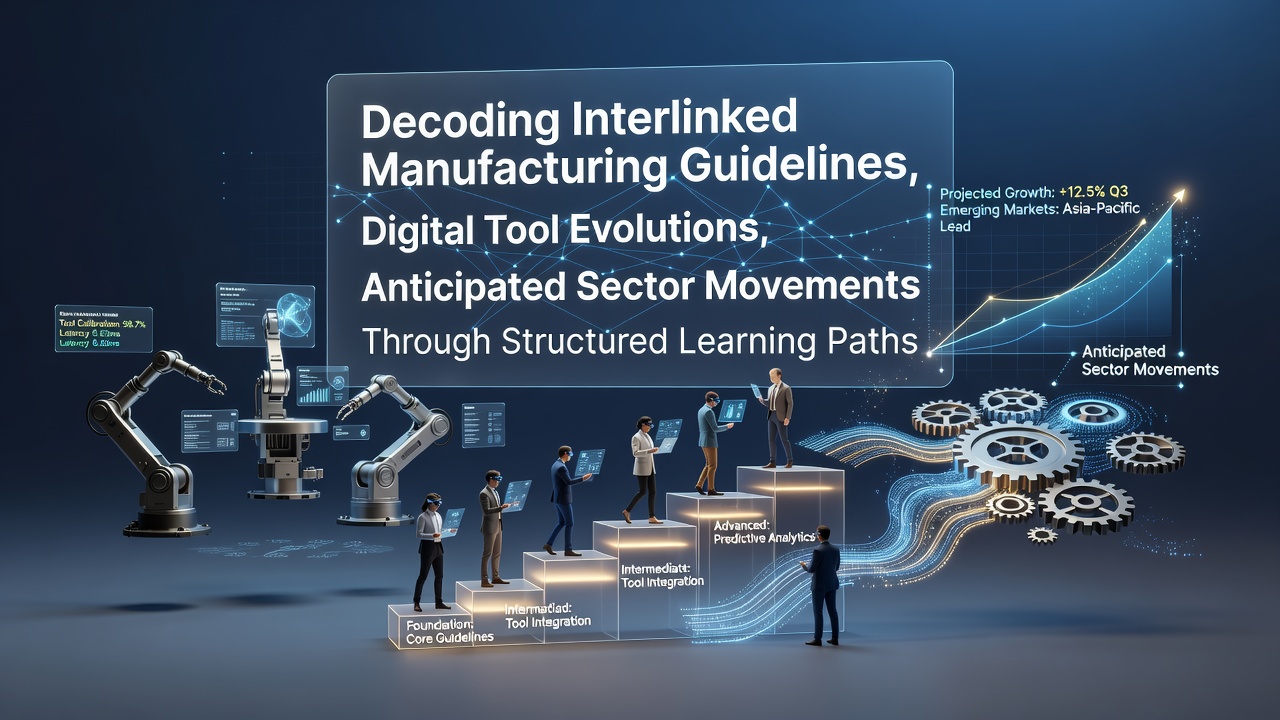
Decoding Interlinked Manufacturing Guidelines, Digital Tool Evolutions, and Anticipated Sector Movements Through Structured Learning Paths
Manufacturing sectors worldwide continue to navigate complex webs of guidelines that connect quality standards, safety protocols, environmental regulations, and supply chain requirements, while digital tools advance at a steady pace and sector movements point toward greater integration of automation and sustainability practices. Structured learning paths offer a systematic approach that helps professionals break down these connections, track tool developments, and prepare for projected shifts in operations and market demands as of October 2026.
Interlinked Guidelines Shape Modern Manufacturing Operations
Guidelines in manufacturing rarely stand alone, and experts note that updates in one area frequently trigger adjustments across others, such as how changes in material sourcing regulations affect both compliance documentation and production scheduling systems. Research from the European Commission's manufacturing policy reviews indicates that interconnected frameworks now cover over 60 percent of industrial processes in member states, with data showing tighter links between ISO standards and regional environmental directives. Those who study these networks find that mapping the relationships between guidelines reduces errors in implementation, particularly when firms adopt modular training sequences that address one connection at a time before expanding outward.
Observers point out that supply chain disruptions recorded through 2025 prompted several updates to traceability rules, which in turn influenced quality assurance checkpoints in assembly lines across North America and Asia. Government reports from Canada's Innovation, Science and Economic Development department reveal that companies using visual mapping exercises within learning modules achieved faster alignment with revised traceability requirements than those relying on traditional documentation reviews alone.
Digital Tool Evolutions Drive Efficiency Gains
Digital tools in manufacturing have progressed from basic monitoring software to integrated platforms that combine real-time data analytics, predictive maintenance algorithms, and digital twin simulations. Figures from the National Institute of Standards and Technology show adoption rates for advanced sensor networks rising by 22 percent between 2024 and 2026 in U.S. facilities, while similar growth appears in Australian industrial reports focused on IoT integration. Structured learning paths break these evolutions into progressive modules, starting with basic data interpretation and advancing to scenario modeling that mirrors actual factory conditions.
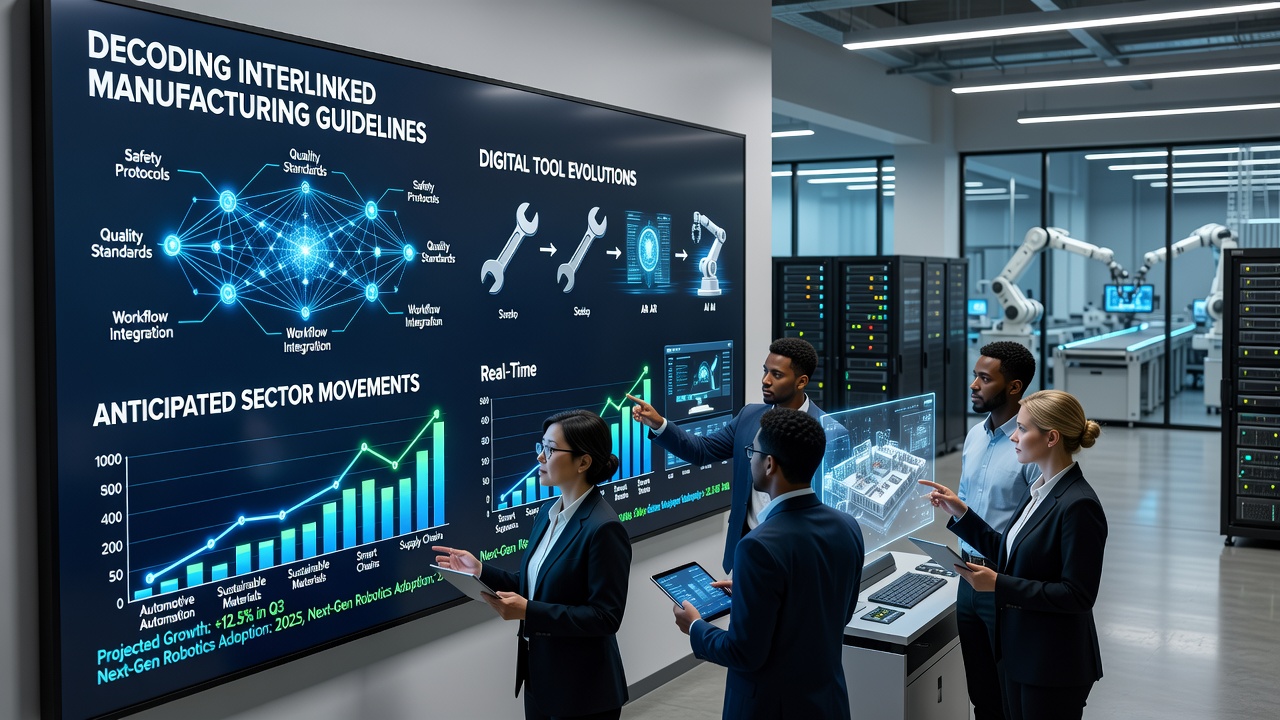
Experts have observed that platforms incorporating machine learning for process optimization require staff to understand both the underlying algorithms and the manufacturing context in which they operate. One study released by a research consortium at Delft University of Technology examined facilities that introduced phased digital training programs and found measurable reductions in downtime after six months of consistent module completion. These paths often include interactive simulations that let participants test tool updates without risking live production lines, creating a bridge between theoretical updates and practical application.
Anticipated Sector Movements Point to Integrated Futures
Projected movements in the manufacturing sector emphasize circular economy models, expanded use of additive manufacturing, and deeper reliance on collaborative robotics. Data compiled by the World Economic Forum's manufacturing outlook documents indicate that firms investing in cross-functional training see quicker adaptation to these trends, with particular emphasis on combining guideline interpretation with digital tool proficiency. In October 2026, several industry associations reported ongoing pilots that link sustainability metrics directly to production planning software, allowing teams to adjust workflows based on both regulatory and efficiency signals.
Researchers tracking these developments note that learning paths designed around case studies from multiple regions help participants anticipate how movements in one market affect global supply expectations. For instance, shifts toward localized production in Europe have prompted parallel guideline adjustments in North American facilities, and structured modules that connect these patterns enable faster strategic responses.
Structured Learning Paths Build Practical Competence
Effective learning paths organize content around core competencies while embedding connections between guidelines, tools, and future movements. Academic analyses from institutions such as the University of Tokyo highlight that sequential modules improve retention when they incorporate real production data and require participants to apply concepts immediately. These paths frequently use branching scenarios that reflect how a single guideline change can cascade through digital monitoring systems and influence long-term sector positioning.
Industry organizations report that employees who complete such programs demonstrate stronger ability to identify emerging compliance needs and evaluate new tool features against operational goals. The approach avoids isolated training sessions and instead builds cumulative knowledge that aligns with the interconnected nature of modern manufacturing environments.
Conclusion
Manufacturing continues to evolve through layered guidelines, advancing digital capabilities, and shifting sector priorities that demand coordinated responses from the workforce. Structured learning paths provide a framework that supports systematic understanding of these elements, helping organizations maintain compliance while integrating new tools and preparing for documented trends through October 2026 and beyond. Data from regulatory bodies and research institutions consistently show that methodical training sequences correlate with improved operational outcomes in environments where multiple factors intersect.