Leon Reed · 5 September 2026
Tracing App Ecosystem Changes Via Policy Analysis and Interactive Beginner Modules for Future Developments
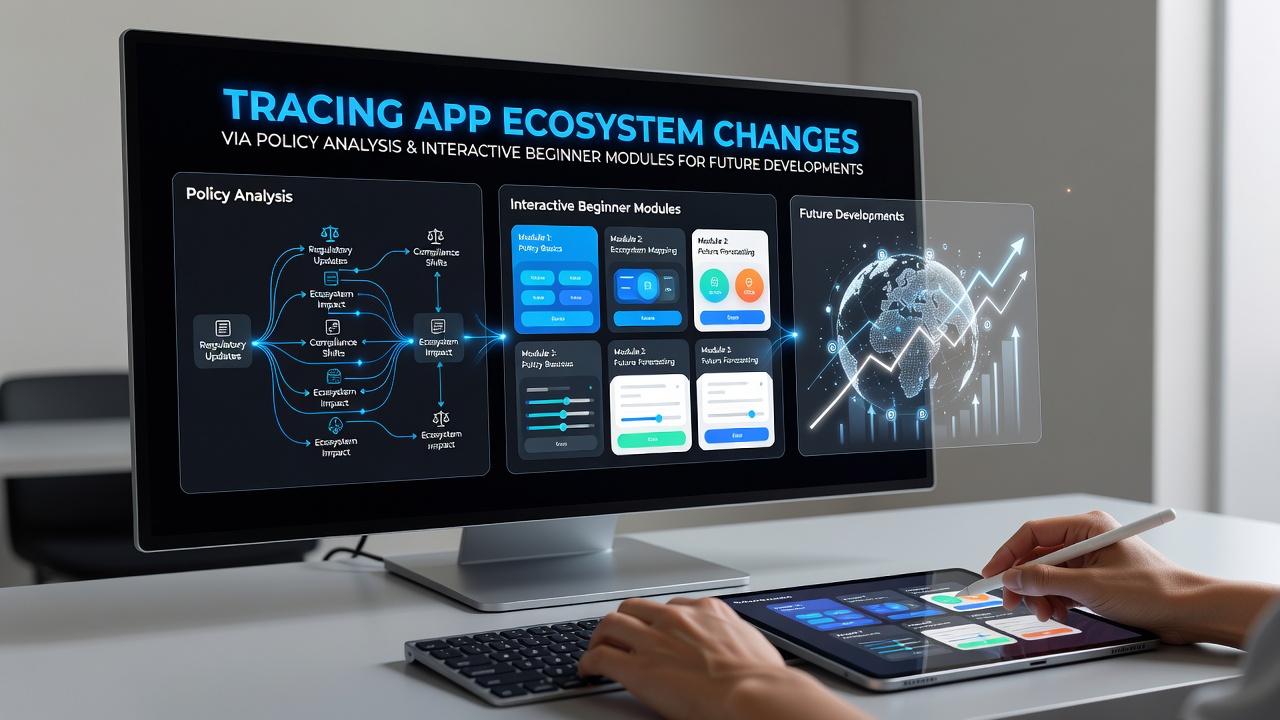
App ecosystems continue to shift under layers of regulatory updates and platform rule adjustments that developers and analysts track through structured policy analysis methods. These approaches break down how changes in data handling requirements, distribution agreements, and security standards ripple across mobile operating systems, third-party marketplaces, and enterprise deployment tools, while interactive beginner modules provide entry points for new participants to map those shifts without prior technical depth.
Policy analysis starts with systematic collection of official documents from multiple jurisdictions, followed by cross-referencing against release notes issued by major platform operators. Data from government portals shows that updates to privacy frameworks often precede measurable changes in app store approval rates and user permission patterns. Researchers at academic institutions have compiled timelines that link specific clauses in legislation to observable drops in certain data-sharing features across popular applications.
Core Methods in Policy Analysis for App Ecosystems
Analysts begin by categorizing policy documents according to their scope, whether they target consumer data rights, developer obligations, or cross-border data flows. They then apply timeline mapping to align regulatory effective dates with corresponding updates in app store guidelines and software development kits. This process reveals patterns such as accelerated removal of location-tracking capabilities after new consent rules take hold in one region and subsequent adoption of similar restrictions elsewhere.
Tools for this work include open databases maintained by regulatory bodies and industry consortia. One frequently referenced resource comes from the Federal Trade Commission guidance on mobile privacy, which outlines enforcement priorities that influence how developers adjust features. Another source used in comparative studies is the Australian Competition and Consumer Commission reports on digital platform practices that track compliance trends across Asia-Pacific markets.
Interactive Beginner Modules and Their Structure
Interactive modules designed for newcomers present these analysis techniques through guided simulations rather than static reading lists. Participants work through scenarios where they review sample policy texts, identify key clauses, and predict downstream effects on hypothetical app features. The format uses branching decision trees that adjust based on user selections, reinforcing how small wording differences in regulations can lead to broad ecosystem adjustments.
Modules typically cover three stages: document parsing, impact forecasting, and scenario testing. In teh parsing stage, users highlight sections related to data minimization or age verification. Forecasting then prompts them to link those sections to changes in app permissions or advertising models. Scenario testing allows users to adjust variables such as regional rollout dates and observe simulated outcomes in app store metrics. Completion data from pilot programs indicates higher retention when modules incorporate real-time feedback loops that compare user predictions against historical records.
Developments Expected Around September 2026
Scheduled reviews of several digital services frameworks are set for completion by September 2026, with draft proposals already circulating among standards organizations. These reviews focus on emerging areas including AI-driven recommendation systems inside apps and obligations for transparency in algorithmic decision-making. Policy analysts have begun building preliminary models that connect proposed transparency requirements to potential modifications in how apps collect behavioral signals for personalization.
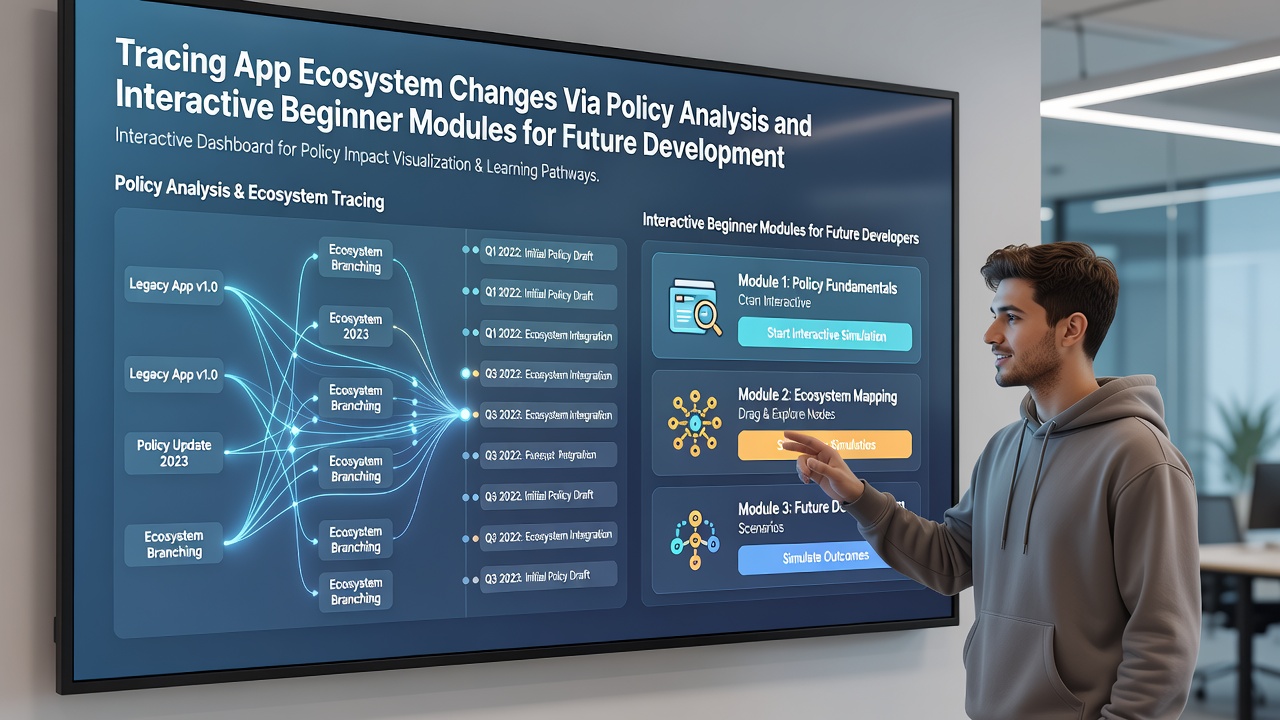
Beginner modules are being updated in parallel to incorporate sample language from these drafts. The updates allow users to practice tracing how new disclosure rules might affect data flows between apps adn cloud services. Observers note that early access to such modules helps participants recognize connections between policy language and technical implementation choices before the rules become binding.
Integration of Analysis and Modules for Forward Planning
Organizations combine outputs from policy analysis with module-based training to prepare teams for upcoming shifts. This integration occurs through shared dashboards that display both regulatory timelines and module completion rates. Teams use these dashboards to prioritize which ecosystem segments require closer monitoring, such as health data apps or financial service integrations, where policy changes tend to impose stricter audit trails.
Case examples from research papers illustrate how one European university group applied this combined approach ahead of earlier data protection revisions. Their work tracked permission request changes across hundreds of apps and correlated those changes with module-assisted training sessions delivered to student developers. The resulting dataset provided measurable indicators of how quickly new policies translated into code-level adjustments.
Conclusion
Policy analysis supplies the factual backbone for understanding app ecosystem evolution, while interactive beginner modules translate those findings into accessible learning pathways. Together they create a repeatable process for identifying regulatory drivers and anticipating their technical consequences. As frameworks undergo scheduled updates through 2026, continued refinement of both analysis methods and module content will support consistent tracking across regions and development communities.